
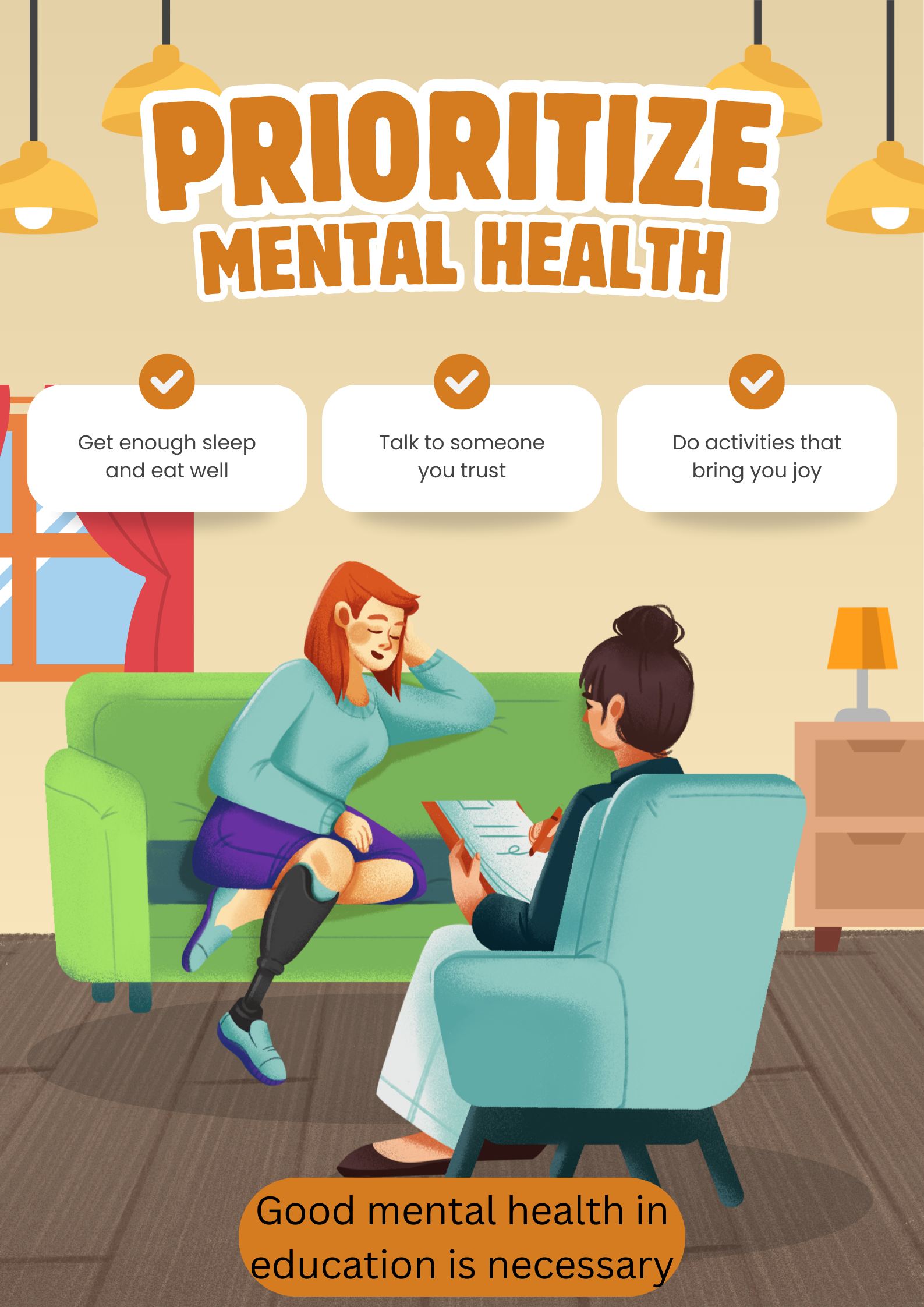
Why Education and Mental Health Belong in the Same Conversation in 2025
(Positives, Negatives, and What Works)
Schools are the daily environment where children and teens learn, socialize, and cope. That makes education and mental health inseparable. A healthy school climate improves attention, attendance, behavior, and achievement. Poor mental health, on the other hand, disrupts learning, weakens peer relationships, and raises absenteeism and dropout risk. When educators integrate mental health and well-being into teaching and school culture, they amplify academic success—and when they ignore it, both learning and life outcomes suffer. promoting mental health
The Positive Impact of Education on Mental Health
When done well, education and mental health support one another. Here’s how schools can help students thrive:
1) Mental health literacy reduces stigma and increases help-seeking
Curriculum that teaches students what mental health is, how to notice signs, and where to get help improves knowledge, reduces stigma, and increases the likelihood that students will reach out to trusted adults. That means earlier support and fewer crises. promoting mental health
2) Mindfulness and self-regulation reduce anxiety and depressive symptoms
Short, age-appropriate practices—mindful breathing, movement, and reflection—can lower anxiety and depressive symptoms and increase positive coping and resilience across grade levels. Even brief daily routines matter. promoting mental health
3) Social-emotional and behavioral learning (SEB/SEL) builds protective skills
Programs that teach self-awareness, emotion regulation, problem-solving, empathy, and relationship skills tend to reduce internalizing symptoms (like anxiety and low mood), strengthen resilience, and improve classroom climate. promoting mental health
4) School connectedness buffers stress
When students experience caring relationships with peers and adults, they are more engaged and less vulnerable to negative mental health outcomes. Relationship-building strategies (classroom circles, advisory, strong family-school communication) increase belonging. promoting mental health
5) Access to timely support
Schools can link students to in-house or community services (including telehealth), reducing common barriers such as transportation, waitlists, or lack of local providers—especially important in rural or underserved areas. promoting mental health
Bottom line: A well-designed education environment strengthens student well-being, reduces risk, and supports learning.
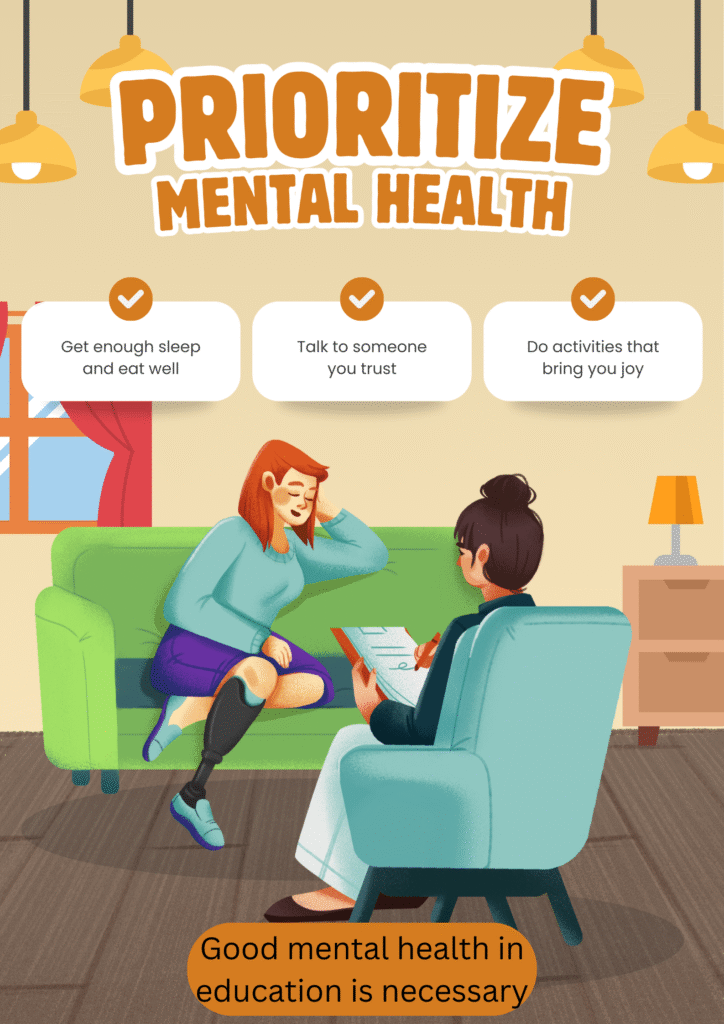
The Negative Impact of Education on Mental Health
Not all school experiences are protective. The same systems that help can harm if poorly designed.
1) Excessive academic pressure and high-stakes culture
Grade obsession, relentless testing, and overloaded schedules can drive stress, anxiety, and sleep loss. Without explicit coping supports and workload balance, students may disengage or burn out.
2) Exclusionary discipline and weak classroom management
Suspensions and punitive responses—especially when applied inequitably—are linked to lower school connectedness and worse academic outcomes. Trauma-insensitive practices can escalate behavioral challenges rather than resolve them. Restorative approaches reduce exclusion and improve relationships. promoting mental health
3) Stigma, bullying, and identity-based harassment
Students who face racism, discrimination, or anti-LGBTQIA+ bias are at higher risk for poor mental health and alienation. If schools lack protective policies and inclusive practices, students’ well-being suffers. promoting mental health
4) Inconsistent access to services
Provider shortages, cost, or lack of awareness can delay care. Without clear referral pathways, students who need Tier 2 or Tier 3 support may fall through the cracks. promoting mental health
Key insight: The same structures that make education and mental health work—safety, belonging, support—can break under pressure or inequity. That’s why evidence-based design matters.
What Actually Works: Evidence-Based Strategies for Schools
Research-informed school strategies consistently show positive effects on mental health and well-being:
- Increase mental health literacy
- Classroom curricula that demystify mental health, teach help-seeking, and reduce stigma.
- Peer-led programs that model healthy coping and normalize asking for help. promoting mental health
- Promote mindfulness
- Brief classroom lessons and daily moments to practice.
- Small-group programs for students with elevated symptoms. promoting mental health
- Teach social, emotional, and behavioral skills
- Universal instruction (Tier 1) plus targeted small-group support (Tier 2) for higher-need students.
- Integrate skills across subjects (e.g., reflection in literacy, teamwork in science labs). promoting mental health
- Enhance connectedness with students, staff, and families
- Relationship-building routines (advisory, check-ins, family communication).
- Programs tailored to unique groups (e.g., military-connected, new arrivals). promoting mental health
- Provide psychosocial skills training & cognitive-behavioral interventions
- Classroom CBT elements (challenging unhelpful thoughts, behavioral activation).
- Small-group/individual CBT for anxiety, depression, trauma; coping skills groups for transitions. promoting mental health
- Support staff well-being
- Mindfulness-based professional learning and accessible therapeutic resources (e.g., ACT workbooks).
- Healthier staff → better climate and more effective instruction. promoting mental health
These strategies align with whole-school frameworks and can be implemented step-by-step without overwhelming teachers. promoting mental health

A Practical Framework: MTSS for Whole-School Support
MTSS (Multi-Tiered Systems of Support) organizes education and mental health services into three layers:
- Tier 1 (Universal): School-wide practices for all students (mental health literacy, SEL, daily mindfulness, connectedness routines).
- Tier 2 (Targeted): Small-group supports for students with emerging needs (coping skills groups, targeted social-emotional instruction).
- Tier 3 (Intensive): Individualized intervention for specific or severe needs, often involving licensed professionals; schools coordinate with families and community providers (including telehealth). promoting mental health
Why MTSS works: It matches student well-being supports to actual levels of need, uses data for decisions, and prevents “one-size-fits-all” mistakes. promoting mental health
Classroom Playbook: Simple Routines That Boost Well-Being
Educators can start small and still make a big difference. Try these Tier 1 routines:
- Two-minute check-ins: A quick temperature check (“How are you arriving today?”) builds trust and surfaces silent struggles.
- Mindful minute: Start class with 60–90 seconds of breathing or grounding to reduce noise and reactivity.
- Normalize help-seeking: Post “Who to talk to” posters (teacher, counselor, nurse, helpline) and model language like “It’s okay to ask for support.”
- Micro-SEL: Embed small skills daily—feeling words, re-framing thoughts, “stop-think-act” before group tasks.
- Relationship rituals: Name games, shout-outs, student-led appreciations, or “rose/bud/thorn” reflection to boost connectedness.
- Academic integration: In literacy, add reflective journaling; in science, team contracts; in history, perspective-taking; in math, growth-mindset prompts. promoting mental health
For Tier 2–3, coordinate with your mental-health team: short CBT skill cycles, coping groups for transitions, and referral pathways for individualized care. promoting mental health
Family & Student Guide: Doable Steps at Home
Because education and mental health extend beyond the school day, families can reinforce protective habits:
- Rhythm and sleep: Consistent routines (bedtime, screens, meals) lower stress and improve attention in school.
- Talk early, talk often: Normalize feelings; practice naming emotions and brainstorming coping ideas together.
- Know the map: Save school contacts and community resources; consider telehealth options if travel is hard.
- Practice mini-mindfulness: 2–5 minutes after school or before homework.
- Celebrate small wins: Notice effort and progress, not just grades. promoting mental health
Equity, Inclusion, and Belonging
Education and mental health must work for every learner. Equity isn’t an add-on; it’s a protective factor.
- Culturally and linguistically responsive supports: Offer materials and services in home languages; partner with community groups; reflect student identities in staff and curriculum.
- Protected policies: Strong anti-bullying and anti-harassment policies (explicitly safeguarding race, ethnicity, disability, gender identity, and sexual orientation) reduce risk and increase student well-being.
- Belonging structures: Affinity groups (e.g., genders & sexualities alliances), inclusive clubs, and representative staffing strengthen connectedness.
- Trauma-informed discipline: Swap exclusionary practices for restorative approaches—conflict resolution, repair, and accountability that preserve community ties. promoting mental health
Red Flags & Safety Nets
Know when to escalate beyond classroom strategies:
- Red flags: Sustained sadness, irritability, sudden withdrawal, self-harm talk, drastic grade/attendance changes, substance misuse.
- Safety nets: Clear crisis protocol; confidential referral pathways; caregiver communication plans; partnerships with community and telehealth providers; staff training on how to respond and how to document.
- Screening with care: If using universal screening, plan data privacy, follow-up capacity, and equity safeguards before you launch.
Key Takeaways for Schools
- Education and mental health are inseparable: well-being fuels learning; distress blocks it.
- Positive impacts come from mental health literacy, mindfulness, SEL/SEB, connectedness, CBT-based supports, and staff wellness.
- Avoid harm by reducing excessive pressure, replacing exclusionary discipline with restorative approaches, and enforcing equity-centered policies.
- Use MTSS to deliver the right support at the right time—and plan for referrals and telehealth partnerships.
- Start small: embed 1–2 routines this week, then grow into a whole-school system.
Is teaching mental health in class “too heavy” for younger grades?
Age-appropriate lessons focus on feelings, coping, and getting help—protective, not frightening. Schools see improved knowledge and attitudes and more help-seeking over time .
Do teachers need therapy training to make a difference?
No. Teachers create the daily conditions (belonging, predictability, skills practice). Mental-health specialists handle diagnosis and intensive supports.
What about staff well-being?
Invest in staff mindfulness/skills training and accessible resources (e.g., ACT self-help). Better staff well-being improves classroom climate and student outcomes.